Your Simple Facial Care Routine for Radiant Skin
Build an elegant daily facial care routine with doTERRA botanical oils. Gentle cleansing, hydration, and a spa-like glow for soft, radiant-looking skin.
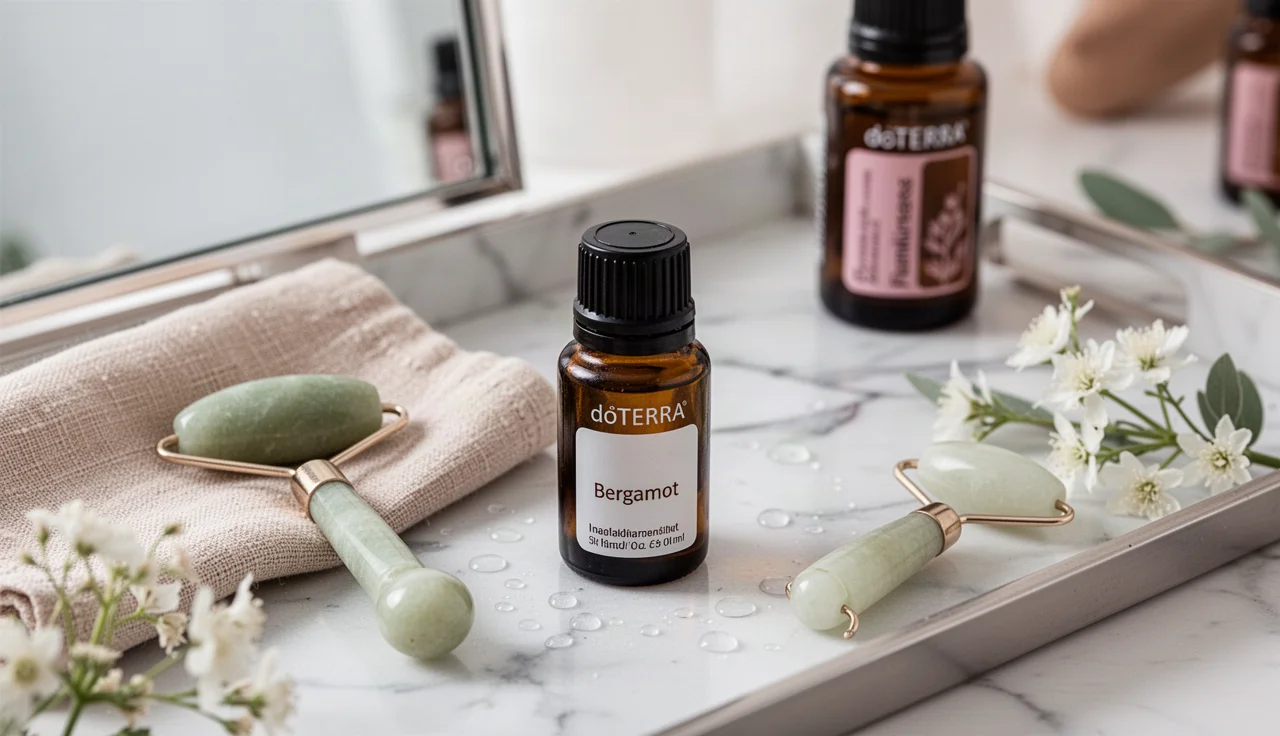
By the VitalResin Team, Skincare & doTERRA enthusiasts
Your bathroom shelf is full of half-used products, but your skin still looks tired by mid-afternoon. Sound familiar?
A facial care routine does not need ten steps or complicated tools. What it needs is consistency, gentle products, and a few botanical oils that treat the whole ritual like a small daily ceremony. In our experience, the simplest routines are the ones people actually stick with, and that is where visible results come from.
The core of any facial care routine is three steps: cleanse, hydrate, and protect. Cleanse removes the day, hydration keeps skin soft and comfortable, and protection supports skin as it faces the environment. You can build a complete routine in under five minutes, morning and evening, using doTERRA products designed to layer beautifully together. The key is choosing formulas that match your skin's needs, diluting essential oils properly, and performing a patch test before introducing anything new.
The Essential Steps of a Facial Care Routine
A good routine needs structure. Here is the step-by-step sequence we recommend most often:
Cleanse gently. A cleanser should remove impurities without leaving skin tight or dry. The Veráge Cleanser is formulated for this purpose, with CPTG essential oils and plant extracts that help skin feel fresh and clean.
Tone and prepare. After cleansing, a few drops of toner can help skin feel balanced and ready for moisture. The Veráge Toner is light and never sticky.
Moisturize. Hydration keeps skin soft and comfortable. The Veráge Moisturizer provides lightweight moisture without a heavy feel.
Target specific areas. For the look of fine lines around the eyes, a dedicated eye product can help soften the appearance. The doTERRA Essential Skin Care Eye Serum is designed for the delicate eye area.
Protect during the day. If you use any citrus oils, including Bergamot, avoid direct sun exposure for about 12 hours after topical application. Citrus oils are photosensitive.
Key Ingredients and What They Offer
The table below compares a few botanical oils often used in facial care, with their cosmetic focus:
| Oil | Cosmetic Focus | Notes |
|---|---|---|
| Frankincense | Softens the look of fine lines, supports a radiant complexion | Our most recommended hero oil for face rituals |
| Lavender | Calms the look of skin, gentle for evening use | Dilute to 1% for facial application |
| [Yarrow | Pom](https://www.doterra.com/US/en/p/doterra-yarrow-pom?OwnerID=15957920) | Supports a smooth, hydrated appearance |
| Tea Tree | Refreshes the look of blemish-prone skin | Use at 1% dilution on the face |
Building Your Morning and Evening Rituals
Morning and evening routines do not need to be identical. Mornings are about freshness and protection, while evenings are about gentle cleansing and deeper hydration.
For a morning ritual, cleanse, tone, and moisturize. If you want a light botanical layer, dilute one drop of Frankincense into 5 ml of jojoba oil, which is 1% dilution, and press it gently over your moisturizer. Jojoba is a liquid wax, so it does not irritate or clog pores the way heavier oils can.
For an evening ritual, remove the day thoroughly. After cleansing, consider the doTERRA Essential Skin Care Facial Scrub two or three times per week to help skin feel smooth and fresh. Follow with your moisturizer and, if desired, a 1% dilution of Yarrow|Pom in a carrier oil for a soft, hydrated feel.
The Veráge Collection bundles the core steps into one simple set, which makes it easier to stay consistent.
Whichever oils you choose, always dilute before applying to your face. For facial use, 1% means about one drop of essential oil per 5 ml of carrier oil. Never apply undiluted essential oils to your face, and perform a patch test: one diluted drop in the inner elbow, wait 24 hours, and check for any reaction before using it on your face.
Sustaining the Ritual Long-Term
The best facial care routine is the one you repeat. Products that feel like a small luxury make repetition easier, and that is why botanical oils work so well in this context. The sensory experience of a few drops of Lavender or Frankincense pressed into your skin can turn a chore into a moment of calm.
Store your oils in dark glass, away from heat and light, and keep the caps closed. Citrus oils oxidize within six to twelve months, while resinous oils like Frankincense can last for years.
For a deeper spa experience at home, our guide to creating a spa facial care routine with essential oils offers step-by-step ideas for turning a regular evening into a small ritual. The key is not adding more products, but using each one with intention.
FAQ
How often should I use a facial scrub?
Two to three times per week is enough for most people. Over-exfoliating can leave skin looking red and feeling sensitive, so give your skin time between scrubs.
Do I need different products for morning and evening?
Not necessarily. A single gentle cleanser and moisturizer can work for both, but many people prefer a lighter morning layer and a richer evening one. The difference is preference, not obligation.
Can I apply essential oils directly to my face?
No. Always dilute essential oils in a carrier oil before facial use. For the face, 1% dilution means about one drop of essential oil per 5 ml of carrier oil, and a patch test is recommended before the first use.
Which carrier oil is best for the face?
Jojoba is our top recommendation because it is a liquid wax that does not oxidize quickly or feel heavy. Sweet almond oil works well for dry skin, and fractionated coconut oil is a light option for the body.
How long does it take to see a difference in my skin?
Cosmetic changes are gradual and individual. Some people notice softer, more hydrated skin within a few weeks of consistent use, but there is no guaranteed timeline.
This content is for general information only and is not medical advice. Essential oils are not intended to diagnose, treat, cure, or prevent any disease; consult a qualified healthcare professional before use.