Frankincense vs Geranium Oil for Skin, Which Wins?
Comparing frankincense and geranium essential oils for skin. Which suits mature, oily or dry skin best? We break down texture, scent and glow factor.
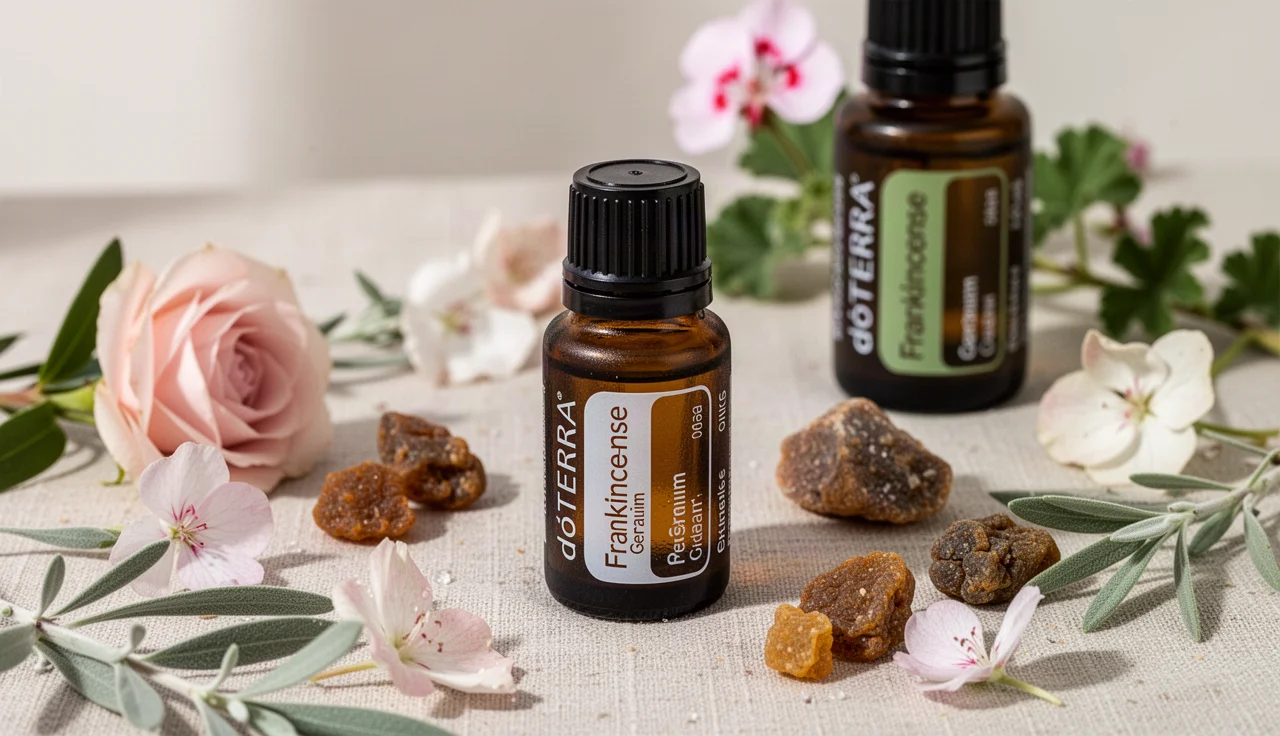
By the VitalResin Team, Skincare & doTERRA enthusiasts
You are standing in front of your oil shelf, one bottle of Frankincense in one hand and Geranium in the other, wondering which one earns a spot in your evening facial oil. The short answer: choose Frankincense if your main goal is softening the look of fine lines and adding a smooth, velvety feel to mature or dry skin. Choose Geranium if you want help balancing the appearance of oily, combination or dull skin, with a fresh, rosy scent that feels lighter on the face. Both are botanical staples in an elegant facial oil blend, and many of our readers actually use them together, with Frankincense as the grounding base and Geranium as the bright, balancing note. In our experience, the right pick comes down to what your skin looks and feels like on a typical afternoon, not what a product label promises.
A Side-by-Side Look at the Two Oils
Before we get into routines, it helps to see them next to each other. The table below compares the practical, everyday qualities that matter when you are mixing a few drops into a carrier oil like jojoba.
| Quality | Frankincense | Geranium |
|---|---|---|
| Botanical source | Boswellia carterii resin | Pelargonium graveolens leaves and stems |
| Scent profile | Warm, resinous, softly woody, slightly sweet | Fresh, floral, rosy, a touch green |
| Skin feel focus | Smooth, velvety finish; helps soften the look of fine lines | Balances the look of oily and dry zones; adds a dewy glow |
| Best suited for | Mature, dry or tired-looking skin | Combination, oily or dull-looking skin |
| Typical concentration on face | 1% (about 1 drop per 5 ml of carrier oil) | 1% (about 1 drop per 5 ml of carrier oil) |
| Photosensitivity | None known | None known |
| Pairing notes | Works beautifully with Lavender or Sandalwood | Pairs well with Clary Sage or Ylang Ylang |
Both oils are essential oils, not vegetable oils. They do not hydrate on their own, so they always go inside a carrier oil. Jojoba is our go-to for the face because it is actually a liquid wax that stays stable and does not clog pores.
How to Use Each Oil, Step by Step
This is a simple evening facial oil ritual. Adjust the oil based on the choice you made above, or blend one drop of each.
- Wash your face with a gentle cleanser and pat dry.
- Pour about 5 ml (one teaspoon) of jojoba oil into your palm.
- Add exactly 1 drop of Frankincense or 1 drop of Geranium. For a blend, use 1 drop of each in 10 ml of jojoba to stay at a 1% concentration.
- Rub your palms together gently and press the oil over your face and neck, avoiding the eye area.
- Spend a minute massaging upward from the jawline to the temples with light strokes.
Before the first use, do a patch test: one diluted drop in the crook of your elbow, wait 24 hours, and check for any reaction. Diluting at 1% for the face is the rule we follow, no exceptions, even for oils that smell as soft as these two.
Which One to Choose If…
Choose Frankincense if…
- Your skin tends to feel dry or tight by midday.
- You want to soften the appearance of fine lines around the eyes and mouth.
- You love warm, resinous, grounding scents during your evening routine.
- You are building a skincare ritual around the idea of slow, mindful self-care.
Frankincense is the hero oil of our skincare line. It appears in the Immortelle blend and pairs naturally with the Yarrow|Pom line for a richer botanical feel. Its main drawback is the scent: warm and resinous is not for everyone. If you prefer fresh and floral, frankincense may feel too heavy.
Choose Geranium if…
- Your T-zone looks shiny by late afternoon while your cheeks feel normal or dry.
- You want a fresh, rosy scent that feels light and bright.
- Your skin looks dull and could use a dewy, even-looking finish.
- You are new to botanical face oils and want something easier to love right away.
Geranium is the balancing note in blends like ClaryCalm and works well in lighter facial oils. Its drawback is that it is less focused on the look of fine lines than frankincense, so mature skin may want frankincense in the mix too.
For a complete skincare ritual with these oils already paired alongside other botanicals, the Veráge collection and Immortelle line are worth exploring. Research on plant extracts and skin appearance is evolving, and the National Institutes of Health offers general background on botanical compounds for anyone curious about the science.
See Frankincense in the doTERRA shop
FAQ
Can I mix frankincense and geranium together for my face?
Yes. A simple 1% blend works well: 1 drop of each oil in 10 ml of jojoba. The frankincense adds a smooth, velvety feel while the geranium brings a fresh, balancing quality to the blend.
Which oil is better for oily skin?
Geranium is the more popular pick for skin that looks shiny in the T-zone. It feels lighter than frankincense and balances the appearance of oily and dry areas without adding richness.
Does frankincense or geranium remove wrinkles?
No essential oil can remove wrinkles or reverse aging. Both oils can help soften the appearance of fine lines and add a radiant, healthy-looking glow, but results are gradual and individual.
Are these oils safe to apply directly to the face?
Never apply essential oils undiluted to the face. Dilute at 1% (about 1 drop per 5 ml of carrier oil like jojoba) and always do a patch test before the first use.
This content is for general information only and is not medical advice. Essential oils are not intended to diagnose, treat, cure, or prevent any disease; consult a qualified healthcare professional before use.