Is doTERRA Frankincense Face Oil Worth It?
We break down doTERRA Frankincense oil for a soft, radiant look. See the pros, cons, and who should actually try it in this honest review.
By the VitalResin Team, Skincare & doTERRA enthusiasts
You have probably seen Frankincense praised as the hero oil for a glowy complexion, and you are wondering if it lives up to the hype. The short answer is yes, for the right person. Frankincense is a resin-derived oil with a warm, grounding aroma that fits beautifully into a botanical face oil ritual. In our experience, it is best understood as a cosmetic enhancer, not a miracle worker. Diluted in a carrier like jojoba, it helps skin feel soft, smooth, and hydrated, and it can soften the look of fine lines over time. It will not erase wrinkles or change your skin overnight. If you want an elegant, sensorial addition to your evening routine and already understand essential oils need dilution, it is worth trying. If you expect instant results or a replacement for moisturizer, it is not.
Why Frankincense Stands Out in a Face Oil Routine
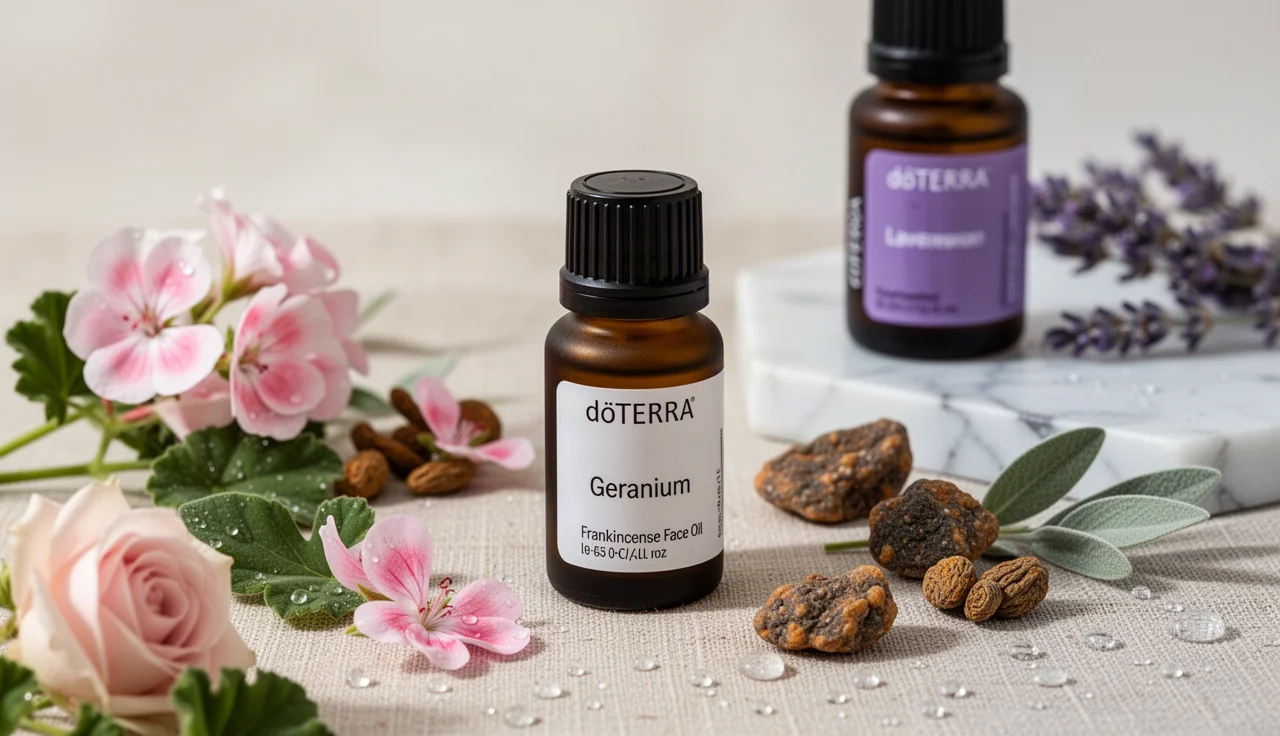
Frankincense, also called Olibanum, comes from the resin of Boswellia trees. In cosmetics, it is prized for its ability to blend well with carrier oils and add a subtle, earthy warmth to a facial ritual. It is not a vegetable oil, so it does not hydrate on its own. That distinction matters. Compared to something like Geranium, which has a floral, balancing profile, Frankincense feels more grounded and mature. Compared to Lavender, which many people find calming and easy to like, Frankincense has a deeper, woodsier character that polarizes a little more. Some people love it immediately; others need a few uses to warm up to it.
| Aspect | Frankincense | Lavender | Geranium |
|---|---|---|---|
| Aroma profile | Warm, resinous, grounding | Floral, soft, familiar | Rose-like, green |
| Typical use | Mature or dull-looking skin | Relaxing evening ritual | Balancing combination skin |
| Texture feel | Blends well into jojoba | Light, versatile | Slightly sweet, softening |
| Best time | Evening face oil | Any time | Any time |
How to Use It for a Soft, Radiant Look
The single biggest mistake we see is applying Frankincense directly to the face. Do not do that. It is a concentrated essential oil and needs a carrier. Here is the approach we recommend most often:
- Choose jojoba as your carrier, about 5 ml in a small glass dropper bottle.
- Add 1 drop of Frankincense. That is a 1% dilution, the right level for facial use.
- Patch test on your inner elbow. Wait 24 hours before putting anything on your face.
- In the evening, smooth 2 to 3 drops of the blend over clean, damp skin.
- Follow with your usual moisturizer. The oil is not a replacement for one.
For a ready-made option, Frankincense Touch comes pre-diluted in a roller, which removes the measuring step. If you want to expand the ritual, Immortelle is a blend designed around the appearance of mature skin, and Yarrow Pom combines oils with pomegranate seed oil for a richer face oil feel.
The Honest Pros and Cons
Pros
- A warm, grounding aroma that makes your evening routine feel like a spa moment.
- Blends well with jojoba and other carriers at a low, skin-friendly 1% dilution.
- Helps skin look soft and smooth, especially when layered under moisturizer.
- A little goes a long way; one 15 ml bottle lasts months in facial use.
- Pairs beautifully with other skin-focused oils like Sandalwood or Rose.
Cons
- It is an essential oil, not a hydrator. On its own, it does not moisturize.
- The aroma does not suit everyone; some find it too heavy or church-like.
- Undiluted use can irritate the skin, so the prep step is non-negotiable.
- Cosmetic results are gradual and individual. There is no timeline to promise.
- It is a premium oil, so the cost may feel high if you only want a basic moisturizer.
We also see people ask how it compares to a citrus oil for glow. Wild Orange and Bergamot are lovely and uplifting, but both are photosensitive, so you must avoid sun for about 12 hours after topical use. Frankincense has no such restriction, which makes it easier for evening use without extra planning.
Who Should Try It, and Who Should Skip It
Frankincense makes the most sense if you already enjoy a slow evening ritual, you like resinous or woodsy scents, and you are comfortable diluting oils properly. It also suits people who want a face oil that feels more grounding than floral. If you have sensitive skin, it can work well, but only at that careful 1% dilution and only after a patch test.
Skip it if you want immediate visible changes, if you dislike earthy aromas, or if you prefer one simple product with no mixing. It is also not the right first essential oil for someone brand new to skincare oils; Lavender or Geranium tend to be gentler entry points.
For a broader look at using Frankincense in a facial routine, our guide on Frankincense facial oil for radiant skin walks through the full ritual in more detail. And if you are curious specifically about that lit-from-within look, Frankincense oil for a radiant face glow covers which complementary oils pair best.
See Frankincense in the doTERRA shop
Related reading
FAQ
Is doTERRA Frankincense safe to put directly on the face?
No. It is a concentrated essential oil and should always be diluted to about 1%, which means roughly 1 drop in 5 ml of a carrier oil like jojoba. A patch test on the inner elbow and 24 hours of waiting are good practice before face use.
Does Frankincense oil moisturize the skin?
Not on its own. Essential oils are not vegetable oils and do not hydrate. Frankincense works as part of a blend with a carrier oil or layered under a moisturizer to help skin look soft and smooth.
How long does a bottle of Frankincense last for facial use?
A standard 15 ml bottle lasts several months when used at 1 drop per 5 ml of carrier. Since facial use requires very little, most people find it stretches far beyond what they expected.
Can I use Frankincense in the morning instead of at night?
Yes, although many people prefer it in the evening because of its grounding, resinous character. Unlike citrus oils, Frankincense is not photosensitive, so morning use is fine if you enjoy the aroma.
This content is for general information only and is not medical advice. Essential oils are not intended to diagnose, treat, cure, or prevent any disease; consult a qualified healthcare professional before use.