Botanical Face Oil Routine for Soft, Hydrated Skin
Build a simple botanical face oil routine for soft, hydrated looking skin with doTERRA oils, dilution tips, and a step-by-step ritual for a natural glow.
By the VitalResin Team, Skincare & doTERRA enthusiasts
You finish cleansing, pat your face dry, and immediately feel that familiar pull of tightness. The question "what should I put on my skin now?" hangs in the air. The answer: a botanical face oil, applied the right way, can leave your face feeling soft, comfortable, and looking naturally hydrated. In our experience, building a routine around plant-based face oils is one of the fastest ways to give skin that fresh, dewy appearance without piling on layers. Here is how we recommend doing it, step by step, with doTERRA oils and simple dilution we trust.
Why a Botanical Face Oil Routine Works
Essential oils are not vegetable oils. They do not hydrate or nourish skin on their own, and they never replace a cream or lotion. Their role is aromatic and cosmetic, and they belong inside a carrier oil. Understanding this distinction is the first and most important step toward a routine that actually feels good.
The right carrier oil matters too. For the face, we recommend jojoba above all: it is a liquid wax, stays stable, and does not block pores. For dry skin, sweet almond oil adds a richer feel. Fractionated coconut oil works best for body massage, not the face. Choose your base deliberately.
| Carrier Oil | Best For | Texture |
|---|---|---|
| Jojoba | Face, combination skin | Light, fast-absorbing |
| Sweet Almond | Dry skin | Richer, comfortable |
| Fractionated Coconut | Body, massage | Light, stable |
Once you have your carrier, the botanical oils become the star. They contribute scent, a sense of ritual, and a cosmetic glow. They do not add moisture themselves, so never skip the carrier.
How to Build the Routine: Step by Step
This is the order we recommend most often. It is simple, consistent, and easy to remember.
- Cleanse with warm water and a cream or foam cleanser. Pat skin slightly damp, not dripping.
- Apply your day cream or lotion first, or mix one drop of diluted facial oil into it. This is the easiest way to start.
- Prepare your blend: use one drop of essential oil per 5 ml of carrier oil. That is a 1% dilution for the face, which we never exceed.
- Warm 2 to 3 drops of the blend between your fingertips and press it gently into the skin. Do not rub or massage hard.
- Finish with sunscreen or makeup as usual during the day. At night, simply leave the oil as your final step.
This five-step ritual takes about two minutes. Keep it consistent, and in our experience the ritual itself becomes as rewarding as the appearance result.
Choosing Your Oils for Soft, Hydrated Looking Skin
For a glowing, hydrated look, we recommend keeping one blend simple rather than mixing many oils at once. A few doTERRA oils stand out for this purpose.
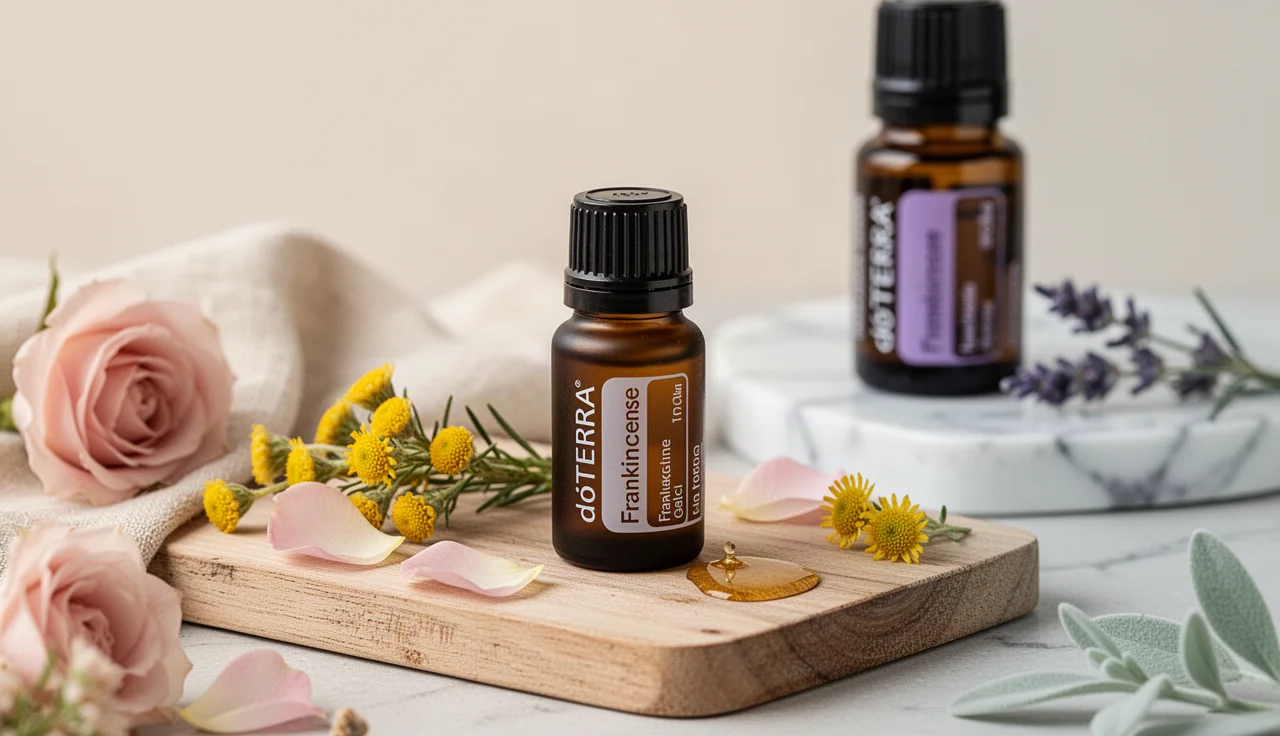
Frankincense is our hero oil for mature skin that wants a smoother, more even appearance. The species Boswellia carterii has the classic, resinous profile that suits this use best. We often suggest blending one drop with jojoba for a nighttime ritual.
Lavender is soft, easy to tolerate, and brings a calming scent. It is the safest starting point for anyone new to face oils. Pair it with one drop of Tea Tree applied only on the appearance of individual imperfections, never across the whole face.
For balance, try Geranium or Roman Chamomile for skin that tends to look reactive or uneven. Ylang Ylang brings an elegant, floral note that feels indulgent in the evening.
One blend we often recommend: one drop of Frankincense plus one drop of Lavender in 10 ml of jojoba. Use it at night as the last step, two to three drops pressed into slightly damp skin. It leaves skin looking soft and comfortable by morning.
If you want a ready-to-use option, the Yarrow|Pom blend is designed specifically for the appearance of youthful, radiant skin. Or explore the doTERRA Immortelle range, which we discuss in more depth in our guide to a hydrating facial oil routine.
Safety First: Citrus, Sun, and Patch Tests
Any routine involving botanical oils needs a few safety rules. They are not formalities, they are the difference between a pleasant ritual and an irritation.
First, patch test before first use: one drop of your diluted blend in the crook of the elbow, wait 24 hours. Second, citrus oils pressed cold, like Bergamot, Lemon, Wild Orange, Grapefruit, and Lime, can cause spots and burns on sun-exposed skin. Avoid direct sun or tanning lamps for about 12 hours after applying them. Third, never apply essential oils undiluted on the face. Fourth, if you are pregnant, nursing, or have a specific skin concern, check with your doctor or midwife before use.
FAQ
How often should I use a botanical face oil?
Most people enjoy using a botanical face oil daily, either morning or evening, whichever feels most comfortable. Start with once a day and observe how your skin looks and feels before increasing.
Can I mix essential oils with my moisturizer?
Yes, that is one of the easiest ways to begin. Add one drop of your diluted blend to your usual moisturizer, or prepare a proper 1% dilution and press it in over damp skin.
Why do I need a carrier oil?
Essential oils are concentrated and are not moisturizers on their own. A carrier oil like jojoba or sweet almond dilutes them safely and gives a comfortable, spreadable texture that leaves skin looking soft and smooth.
Which essential oil is best for glowing skin?
In our experience, frankincense is the oil we recommend most often for a radiant, even appearance, especially combined with lavender in a simple jojoba blend.
Do botanical face oils clog pores?
Jojoba, the carrier we recommend for the face, is a liquid wax that does not tend to block pores. Using a light touch and the correct 1% dilution also helps keep the routine comfortable.
A botanical face oil ritual is a small, consistent pleasure. Choose good carrier oil, blend mindfully, and keep the routine gentle. The glow follows naturally.
This content is for general information only and is not medical advice. Essential oils are not intended to diagnose, treat, cure, or prevent any disease; consult a qualified healthcare professional before use.